SACHI, Society for Art & Cultural Heritage of India Invites You to Join in a Celebration of Krishna, In a Free Webinar Presentation.
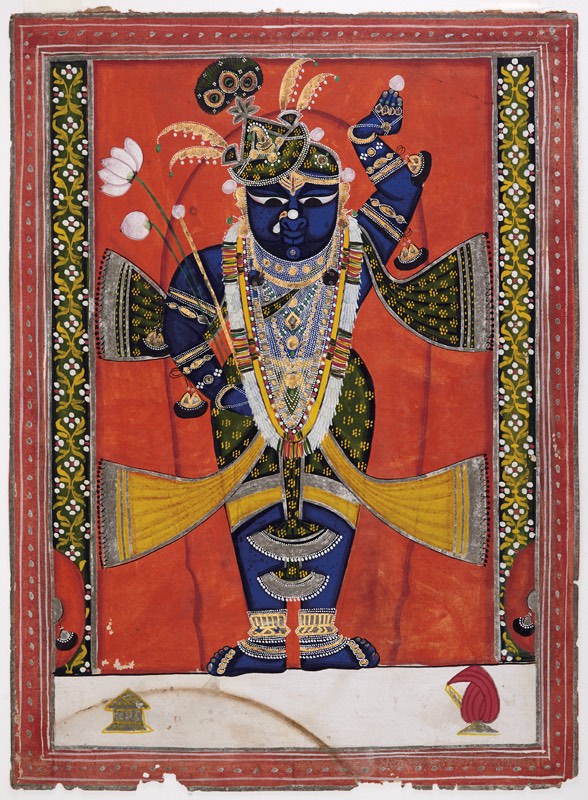
In this illustrated presentation, scholar Kay Talwar will introduce the history and philosophy of a devotional sect, the Pushtimarg, which inspired a distinctive tradition of paintings in adoration of Krishna. She will discuss the stylistic development of this historic practice, and explore the Golden Age of Nathdwara during the time of its spiritual leader and head priest, Tilkayat Govardhanlalji (1862-1934), a legendary patron and connoisseur of the arts.
Nathdwara, located in the Aravalli Hills of Rajasthan, is home to Shrinathji, a 15th century manifestation of the child god Krishna, holding up Mount Govardhan. Since the establishment of the haveli (temple mansion) in 1671, artists have flocked to the sacred town. Their painted cloth hangings adorn the walls where Shrinathji dwells, and their paintings provide icons for the pilgrimage trade.
Image Credit: Shri Nathji, Anil Relia Collection, Ahmedabad, Gujarat, India.
Please view a video recording of the event here.
SACHI cordially invites you to a special afternoon with Frank Ames, distinguished scholar, author , researcher on rare textiles and carpets.
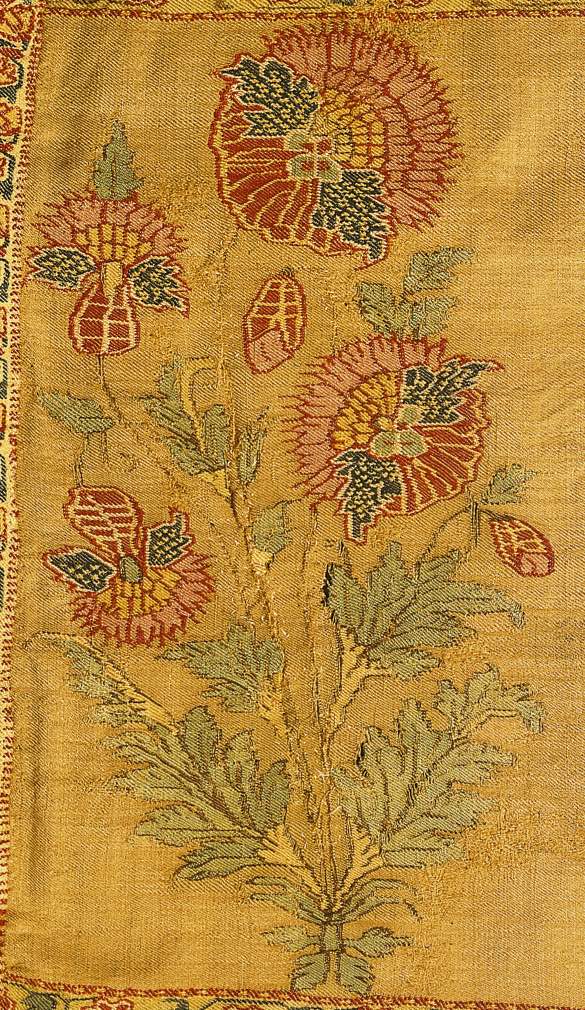
Highlighting whimsical design ideas, borrowed or otherwise, the talk, titled From Mughal Whimsicality to Sikh Ostentation, will journey though the shawl’s early Mughal period before reaching the Sikh imperium era of India’s last great Maharaja, Runjit Singh (1799-1839). During this era of Punjab, India’s colorful history, a variety of complex and enigmatic patterns emerged in the shawl – some purely geometric, others symbolic. Maharaja Ranjjit Singh’s takeover of Kashmir in 1819 had an extraordinary impact on the fashion of legendary Kashmir shawls, giving rise to an outburst of artistic expression on the sub-continent.
Limited Seating.
Image: Courtesy Frank Ames. Mughal Shawl detail c1650
SACHI, and CIIS are honored to present Andrew Ward, Essayist, novelist, scholar artist, and historian of British India, in an Illustrated Talk.
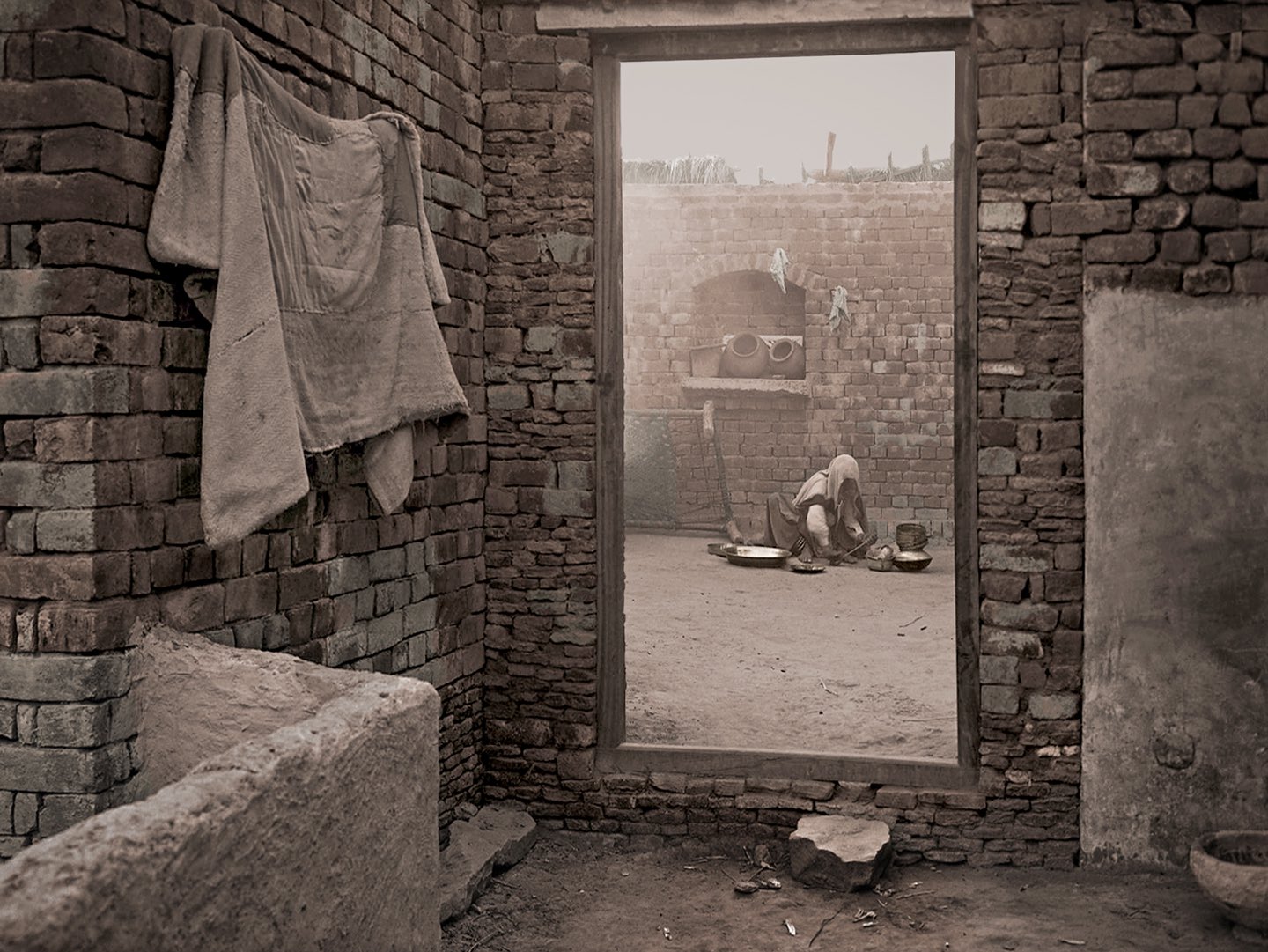
From 1968 to 1970, future historian Andrew Ward worked as a photographer in India. One of his assignments was to cover a year in the life of a North Indian village. He chose the little hamlet of Hushangabad, an hour’s drive southwest of New Delhi, and set out to document the village and its inhabitants.
Ward’s presentation, and accompanying video of his archive of village pictures, will be followed by a conversation with CIIS Professor Debashish Banerji.
RSVP: info@sachi.org; Tel. 415-221-0338. Free and Open to the Public
Image Credit: Andrew Ward